ABOUT LISA
Lisa Roberts, MPhil.
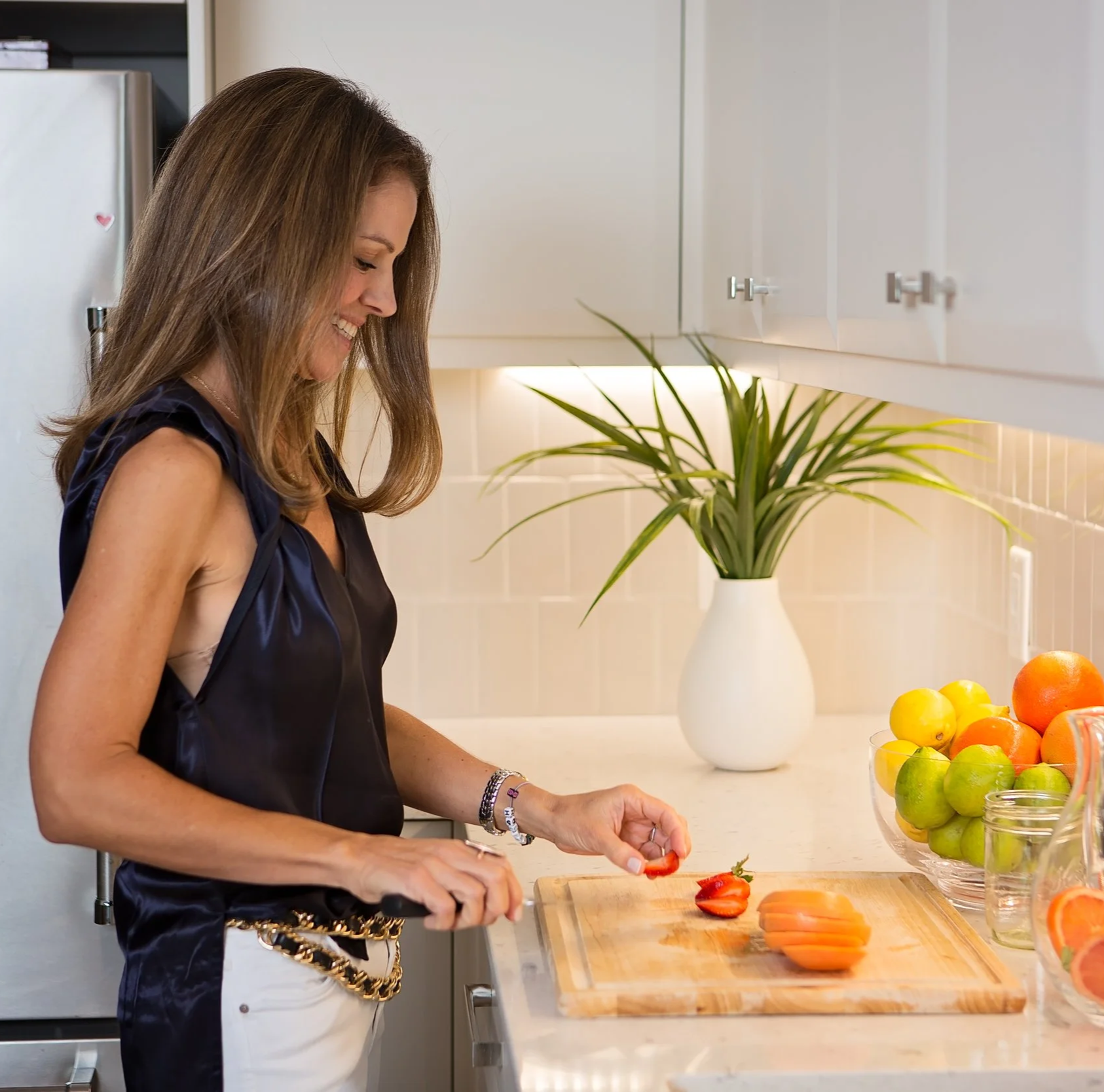
My career has taken me from archaeological research at Oxford to professional kitchens, live television, and advisory roles in nutrition and lifestyle. The setting has changed, but the focus has remained the same: using food as a fun, relevant, and practical way to understand health and care for ourselves.
I founded Lisa Roberts FOOD to give this work a home and created The Archaeology of Well-Being™ as the philosophy that guides it. I bring this framework to leading organizations such as Stanford, NYU, and Canyon Ranch, as well as my private practice.
Archaeology trained me to connect evidence and reconstruct context. Professional kitchens taught me how to make simple ingredients beautiful and, most importantly, delicious. Nutrition and lifestyle medicine gave me the scientific foundation. Television and years of working with adults have shown me how people absorb information, what keeps them interested, and what helps them put it into practice.
-
I have always loved food, especially its origin story. The cornfields behind my grandparents’ house made me want to understand how the Indigenous peoples of the Connecticut River Valley grew and prepared corn, and what it meant in daily life and ceremony.
That question led to a capstone study of Indigenous foods of the Andean region, and later to two degrees in Classical Archaeology at both Oxford and Tufts, focused on ancient food and wine of the Mediterranean, including Hippocrates’ writings on food and health. My research and travels through Peru, Mexico, Costa Rica, and the American Southwest deepened my understanding of traditional foodways and the relationship between food, land, spirit, family, and community.
My own healing is part of the story, too. Recovery from addiction and fibromyalgia taught me how difficult it can be to turn good advice into something we actually live. I am now navigating perimenopause and menopause while raising a son, supporting aging parents, running a business, and continuing to learn what my body needs from me.
Food can be a powerful place to begin, but it is rarely the whole story. That understanding led me into professional cooking, nutrition, lifestyle medicine, health coaching, and lecturing at leading universities and organizations. It still guides the way I work today.
-
Archaeology taught me how to work with incomplete information, connect many reference points, and reconstruct context.
My thesis at Oxford drew evidence from Greece, Egypt, North Africa, the Levant, Anatolia, Rome, and routes reaching farther into Asia, all of which shaped the movement of ingredients, vessels, agricultural knowledge, spiritual and cultural practices, and ideas about health.
An amphora, for example, was more than a vessel for wine, olive oil, or grain; to an archaeologist, it reveals how people lived, what they valued, how they ate, and the hands that shaped it.
I bring that same way of thinking to my work today: a symptom, craving, lab result, diagnosis, or change in energy is part of a larger picture that includes food, relationships, work, stress, environment, personal history, life stages, and daily habits.
Archaeology trained me to notice the connections and understand each part in relation to the whole. I use that perspective to help clients understand the context surrounding their health, so they can decide what will work in their own lives.
-
Food gives us something immediate and practical to work with. A recommendation may begin in a doctor’s office, but eventually it has to become something you shop for, prepare, cook, and eat.
I also believe that food is pure delight, an expression of how we honor our body, mind, heart, and spirit. It can be simple, beautiful, delicious, and something you look forward to.
-
I work with private clients and leading organizations.
Private Clients
Many women come to me with recommendations and suggestions from excellent sources: their medical team, nutrition and wellness practitioners, therapists, trainers, and healers. They are also sorting through advice from family, friends, news outlets, podcasts, and the people they follow online.
They are proactive and invested in their health. Many have taken the time to educate themselves, research protocols, follow recommendations, and do a great deal of inner work. They want someone who can help them make sense of what they already know and translate it into a way of eating, cooking, and caring for themselves that fits the realities of their lives.
Organizations
I also bring this work to universities, corporate clients, and non-profits through talks, workshops, and Food as Medicine programs that make complex health information practical for teams and communities.
-
My background in live television, as an anchor and associate producer on Nantucket, taught me to prepare thoroughly, listen closely, and understand what keeps an audience interested, whether I was interviewing a local fishermen to celebrities.
Teaching cooking and nutrition in diverse settings, from mentoring multi-lingual students in New York City to leading workshops and panels with non-profits and Fortune 500 companies, has shown me how differently people absorb information. Dyslexia and ADD have shaped this part of my work, too. I know how quickly information can become overwhelming, so I use cooking, conversation, visual examples, stories, and practical next steps to give people more than one way into an idea.
Whether I am advising a woman privately, speaking to an organization, or designing a program, my role is to understand the research and make it clear, memorable, and useful.